
Site Links
Sign up to our Newsletter
Sign up for the newsletter and we will send you information about our events and special offers.
Thank you!
You have successfully joined our subscriber list.

Understanding where our materials come from is part of how we work at Semper Hopkins. As a B Corp, responsible sourcing and supply-chain due diligence sit alongside the practical decisions we make about quality, cost and what works well in our workshops.
For me, that means asking questions, understanding where materials have come from and being able to explain why we’ve chosen them.
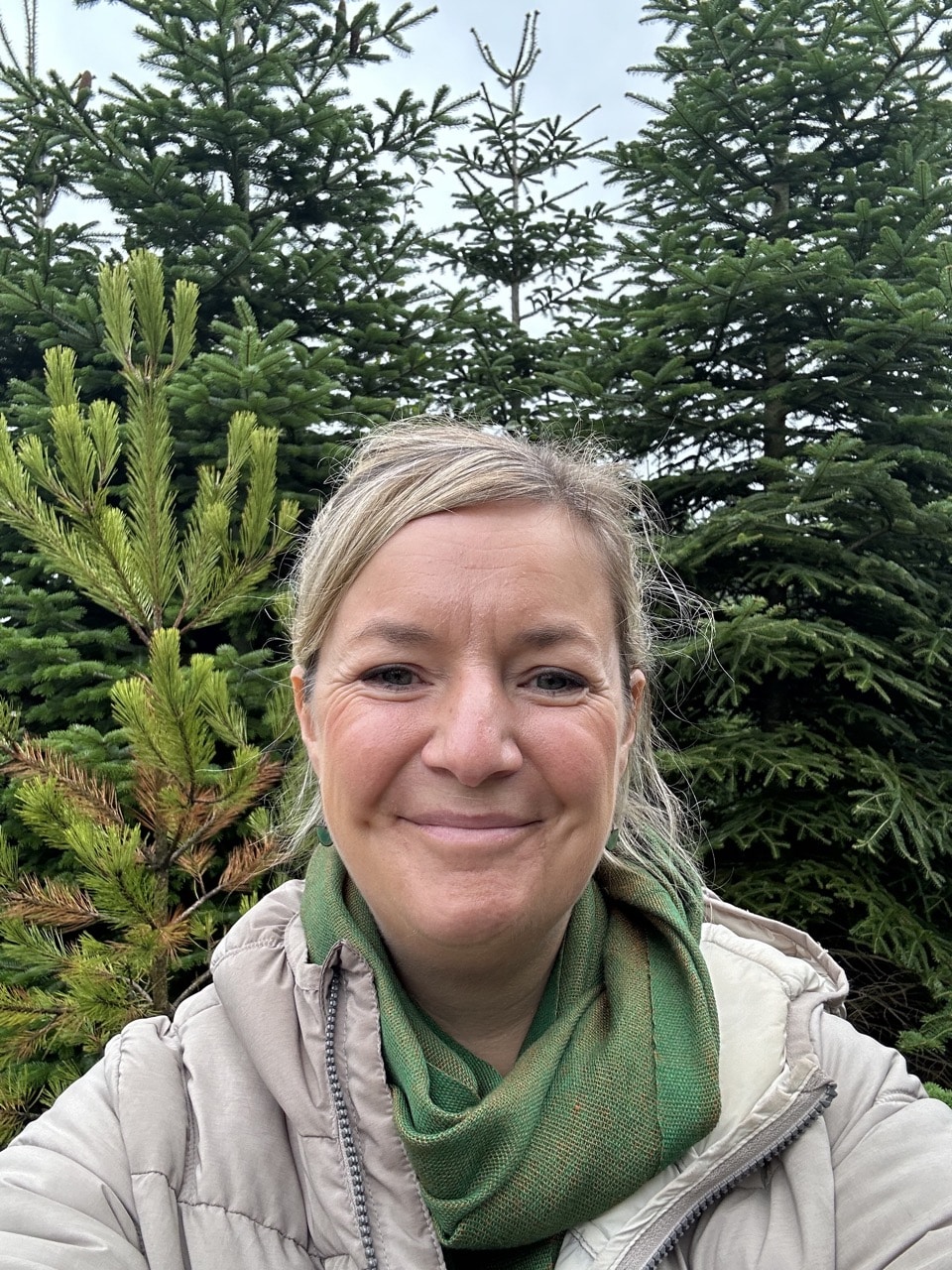
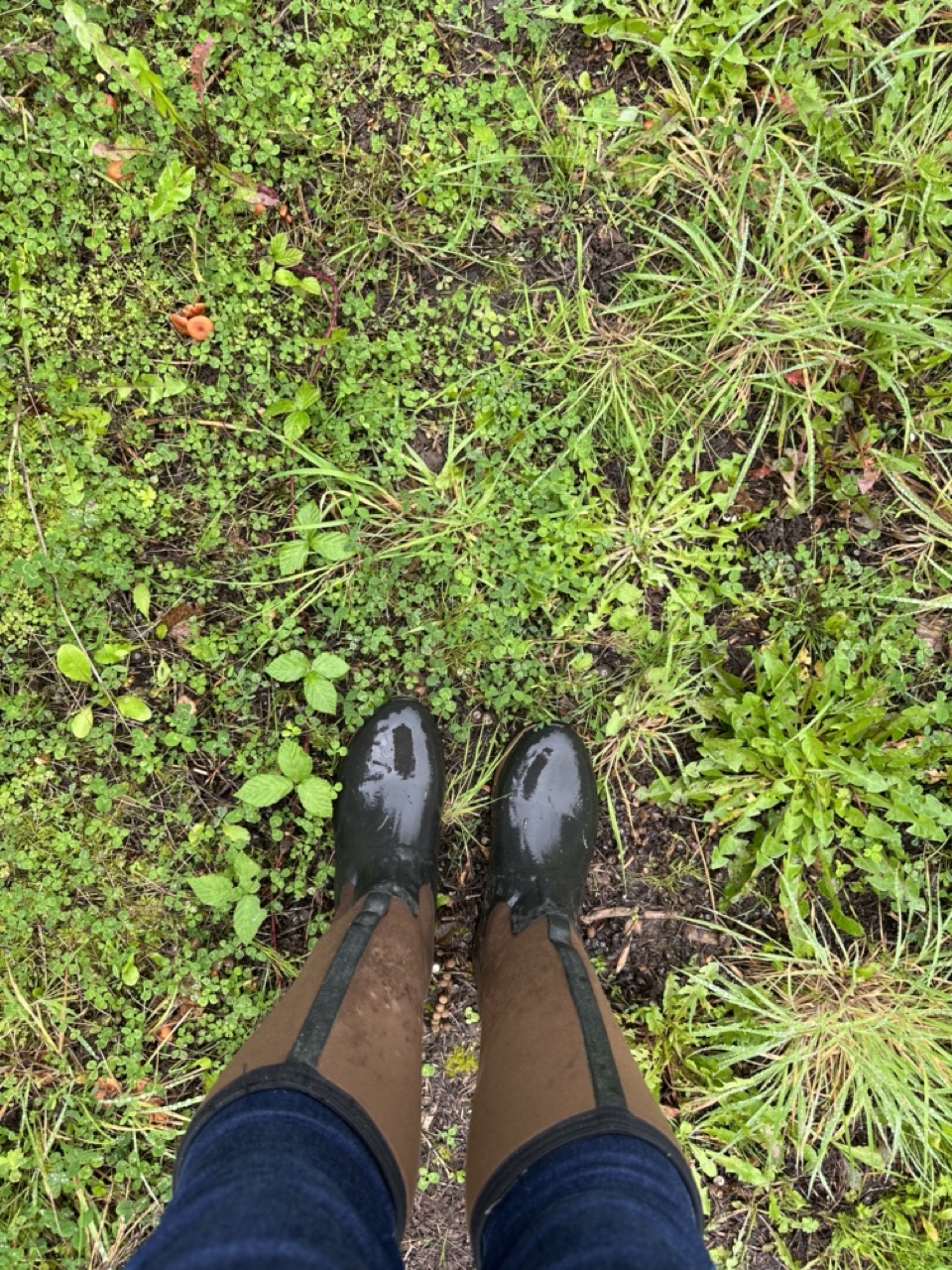
So, with our Christmas wreath workshops coming up, I went to meet the grower who’ll be supplying our spruce foliage this year. That meant pulling on my boots and going for a walk around a Christmas tree field.
Our Christmas wreath workshops take place at The Chapel in Scholar Green, Cheshire, and wherever possible we source the natural materials we use locally.
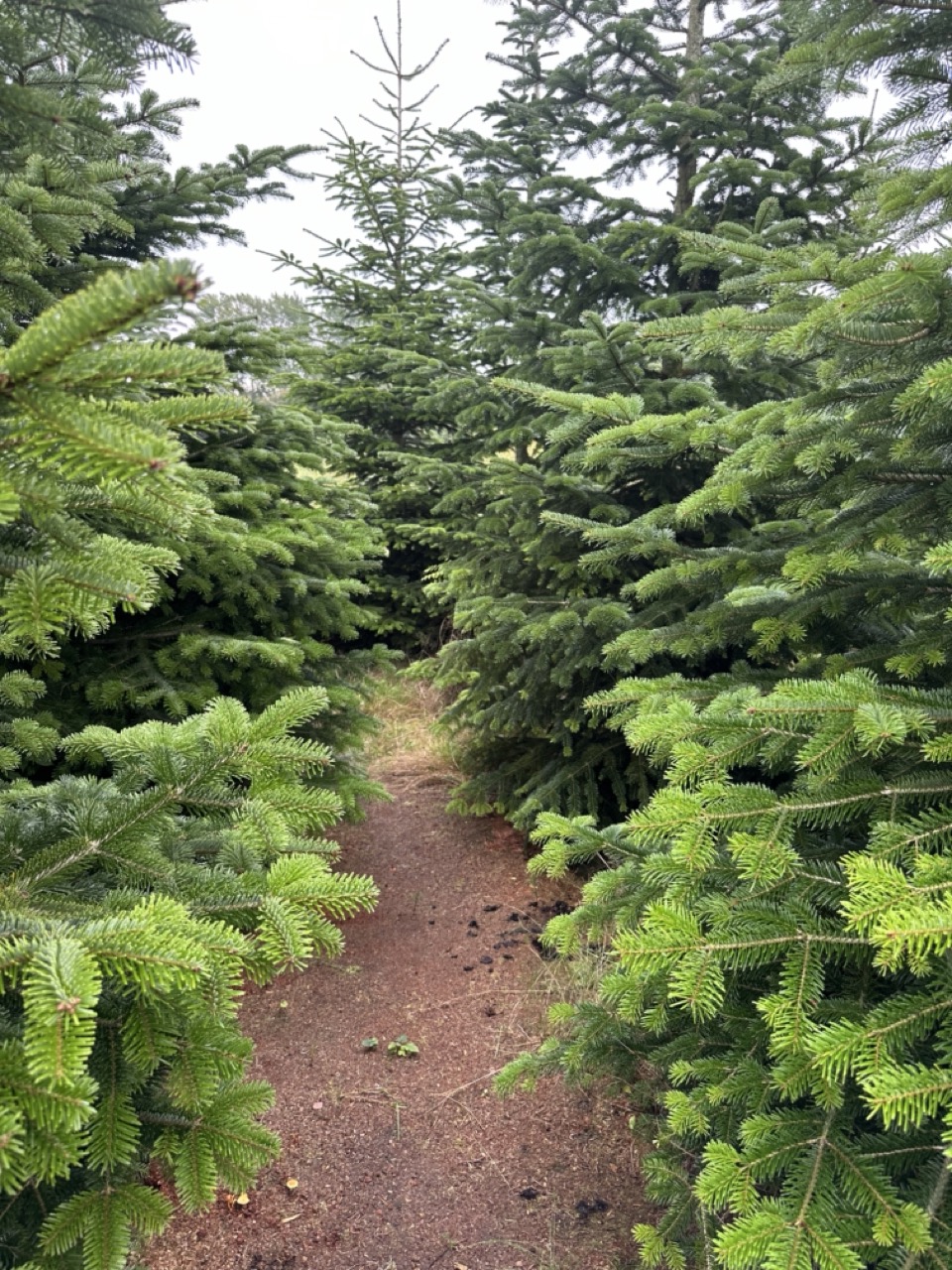
Every Christmas we use a lot of fresh greenery in our wreath-making workshops at The Chapel.
I’ve sourced spruce locally before, but I didn’t have full traceability back to the grower. This year I wanted to go one step further and find someone local whose land I could actually visit, so I could understand where the foliage was grown and how the trees were managed.
Most of the other greenery we use – eucalyptus, rosemary, ivy and other seasonal foliage – is homegrown in our own garden. The two additional materials we need to source are moss and spruce.
That’s how I ended up meeting Colin and Lynda at Woodside Christmas Trees, around 20 miles from The Chapel.
What started as a conversation about buying foliage became a morning walking around their land, seeing the trees for myself and understanding a little more about the family business behind them.
Colin and Lynda have built Woodside Christmas Trees gradually alongside their other work. When the parcel of land next to their home became available, they bought it and began developing it into the Christmas tree business you see today.
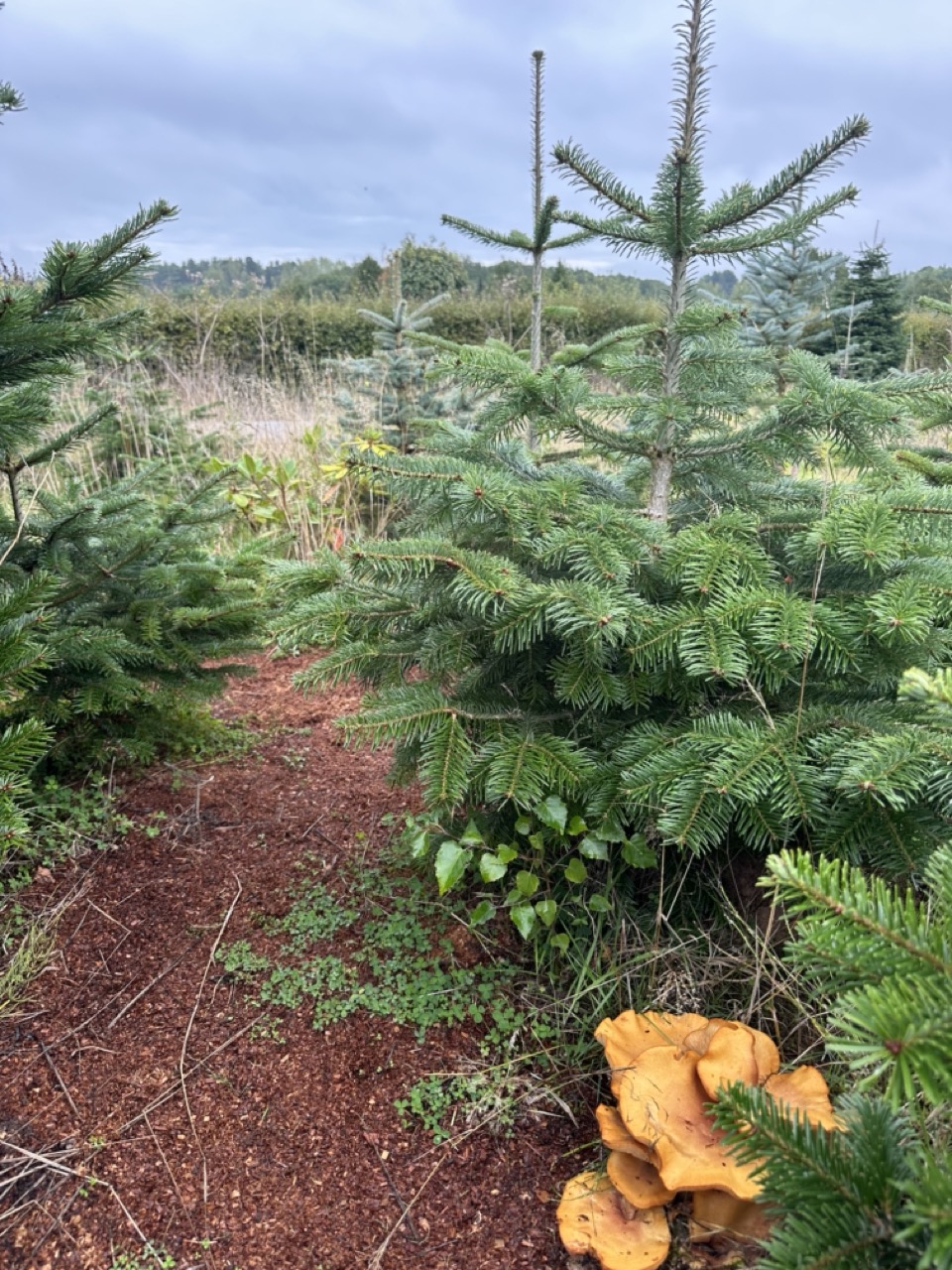
Walking around the land makes that gradual growth really visible. There aren’t rows of identical trees all at the same stage. You see very young trees growing alongside older ones, with different varieties and other vegetation throughout the land.
As trees are sold each Christmas, new trees are planted to replace them, so the next generation is already growing amongst the trees that families will be choosing this year.
This was one of the things I found particularly interesting.
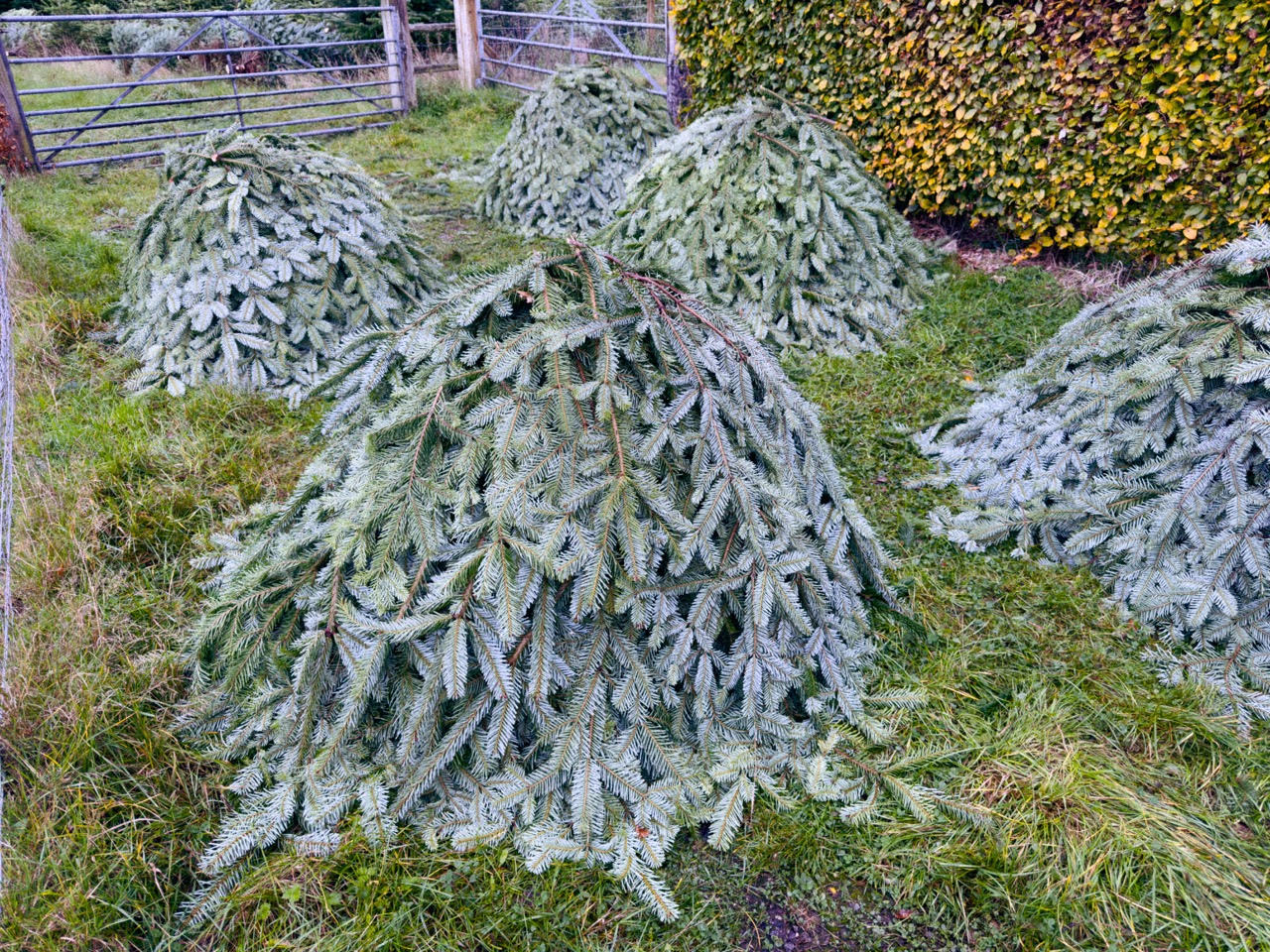
Not every tree grows into the perfect Christmas tree. Some become damaged, some struggle, and others simply aren’t going to become a tree somebody would choose to take home.
Lynda explained that these weaker trees are identified as part of managing the plantation. Where possible, the usable branches are cut from them – and that’s foliage that can have another life in things such as our Christmas wreaths.
Once the usable foliage has been removed, the remaining tree material is used as mulch for the pathways around the land. They also use sawdust from a local wood merchant on the paths, while waste wood is seasoned and sold locally as logs.
It’s a really simple example of something I’m increasingly interested in within our own business: how much value can we get from a material before we consider it waste?
As we walked around, the conversation became about much more than Christmas trees.
Lynda talked about adding more foliage and variety across the land to support biodiversity. They also keep their own bees, so creating a landscape that supports them and other wildlife is part of how they’re thinking about the land as it develops.
They’ve also installed a large area of solar panels and a ground-source heat pump at home as part of trying to make the property as self-sufficient as they can.
None of it felt like something being done simply so they could put a green badge on the business. It’s part of how they’re choosing to develop their home, land and business – and I rather liked that.
Woodside doesn’t just supply trees to local organisations, churches and venues. At Christmas, families can come to the field and choose their own tree.
You can bring the children, wander amongst the trees and decide which one is going home with you. Once you’ve chosen it, they’ll cut it for you.
Families are beginning to return year after year, so something as simple as buying a Christmas tree becomes part of their own Christmas tradition.
And it really is a family business. During the busy Christmas season, Lynda’s sons come and work alongside them, helping with the trees and preparing foliage.
I think there’s something rather special about knowing the people and family behind something we’re buying.
For us, responsible sourcing isn’t simply about buying locally. It’s about understanding what we’re buying and being able to make a more informed choice.
For this year’s spruce, I now know where it’s grown and who grows it. I understand how trees are replanted and how weaker trees are used rather than simply discarded. And by sourcing around 20 miles from The Chapel, we’re supporting another small local family business while keeping the supply chain short.
Small businesses don’t necessarily have pages of environmental policies, certifications and reports. Sometimes due diligence means going to see something for yourself, asking questions, keeping a record of what you’ve learned and making your purchasing decision with that information in front of you.
I’ll be able to tell you a little more about what’s sitting on the table in front of you.
Much of the greenery – the eucalyptus, rosemary, ivy and other seasonal foliage – will have been grown by us at home. The spruce will have been grown by Colin and Lynda at Woodside Christmas Trees, on land I’ve now walked amongst myself.
Some of that spruce may have come from a tree that wasn’t going to make it as a Christmas tree, but whose branches have been given another use before the rest of the tree becomes mulch for the pathways.
I’ll know who grew it, where it came from and a little bit about the family and the land behind it.
For me, that’s what responsible local sourcing should feel like.
And if you’re looking for a Christmas tree this year, there’s another way you can support them too. Rather than simply picking one up, you can take the family, pull on your boots, walk amongst the trees and choose the one that’s going to become part of your Christmas.
You might even find yourselves going back next year and starting a new family tradition of your own.
Website: https://www.woodsidechristmastrees.co.uk/
Email: woodsidetrees@gmail.com
Phone: 07721 032229
If you’d like to get hands-on with some of this beautiful locally grown foliage, join us at The Chapel in Scholar Green for one of our Christmas wreath-making workshops.
You’ll create your own fresh Christmas wreath using spruce from Woodside Christmas Trees alongside eucalyptus, rosemary, ivy and other foliage grown in our own garden.
Our workshops are £85 per person and include all your materials, tuition and afternoon tea, with plenty of time to create, chat and enjoy the experience.